

Home / Drug Classifications and Understanding Types of Drugs / How Alcohol Works in the Body | Absorption, Effects & Metabolism
Alcohol is one of the most widely used substances in Canada and around the world. While many people are familiar with its immediate effects, fewer understand how alcohol actually works in the body—from absorption to metabolism—and why its effects can vary so much from person to person.
Understanding how alcohol affects the brain and body can help people make informed decisions about drinking and recognize when alcohol use may begin to cause harm.
After alcohol is consumed, it enters the digestive system and is absorbed into the bloodstream. Unlike food, alcohol does not need to be digested before entering the blood.

THE SMALL INTESTINE
The majority of alcohol is absorbed here, where it enters the bloodstream quickly.

THE STOMACH
A smaller portion is absorbed through the stomach lining.

THE COLON
Only a minimal amount is absorbed here.
Because alcohol is absorbed rapidly—especially on an empty stomach—its effects can be felt within minutes of drinking.
Eating before or while drinking can slow how quickly alcohol enters the bloodstream. Food delays alcohol’s movement from the stomach to the small intestine, where absorption is fastest.
However, food does not prevent intoxication—it only delays it.
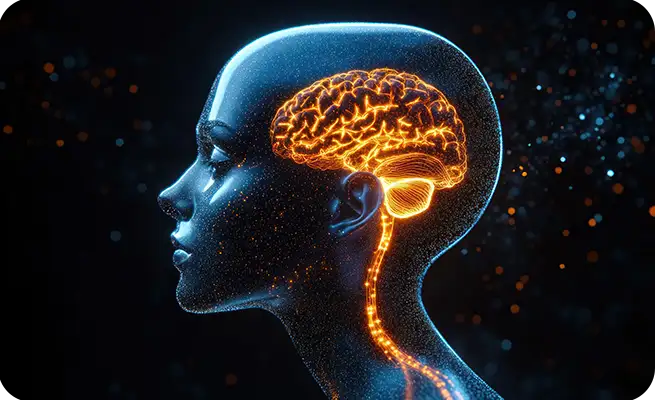
Alcohol is classified as a central nervous system depressant. Once it enters the bloodstream, it travels to the brain and spinal cord, where it slows communication between nerve cells.
As blood alcohol concentration (BAC) rises, alcohol can affect:
At higher levels, alcohol can suppress vital brain functions that control breathing and heart rate, increasing the risk of alcohol poisoning. More on how the brain is affected by alcohol here.
Blood Alcohol Concentration (BAC) refers to the amount of alcohol present in the bloodstream. BAC is commonly used to measure intoxication and impairment.
Several factors influence a person’s BAC, including:

How quickly alcohol is consumed plays a critical role. Drinking rapidly gives the body little time to metabolize it.
Drinking slowly allows the liver more time to process and can reduce the its intensity—though it does not eliminate impairment.

The body’s water content distributes alcohol. People with a higher body weight generally have more body water, which can dilute alcohol more than in smaller-bodied individuals.
Body composition—specifically the proportion of muscle, containing more water, to fat containing less water.

Biological differences affect alcohol metabolism.
On average, biological females tend to have a higher percentage of body fat and lower total body water than biological males.

The liver can only process a limited amount of alcohol at a time, excess alcohol remains in the bloodstream, increasing BAC.

The type and amount of food in the stomach. It determines how quickly alcohol moves into the small intestine where most alcohol absorption occurs.
Because of these variables, two people drinking the same amount of alcohol may experience very different levels of impairment.
Differences in metabolism, body composition, genetics, and drinking habits mean that one person may feel impaired after one drink, while another may not feel effects until later. These differences can make it harder to recognize unsafe drinking patterns.
The liver is responsible for processing most of the alcohol in the body. Specialized enzymes break alcohol down into acetaldehyde (a toxic substance) and then into acetate, which is eventually converted into water and carbon dioxide.
On average, an adult metabolizes alcohol at a rate of about 8.5 grams per hour, which is approximately equal to:
This rate is only an estimate. Alcohol metabolism varies widely depending on factors such as drinking patterns, liver health, body build, sex, and genetics.
People who drink regularly may appear less affected by alcohol due to tolerance, but their bodies do not eliminate alcohol significantly faster. Tolerance can mask impairment, increasing the risk of accidents and long-term health consequences.
Once alcohol has entered the bloodstream, nothing can instantly reverse its effects. Common myths—such as drinking coffee, taking a cold shower, or exercising—do not reduce BAC.
Only time allows the liver to process and remove alcohol from the body.
In some cases, fruit sugars may slightly shorten the duration of alcohol’s presence by supporting metabolic processes, but they do not prevent impairment or intoxication.
Although alcohol can be found anywhere, it is no less a mind-altering substance, which includes:
Repeated or heavy alcohol use can lead to serious health concerns, including:
Understanding how alcohol works in the body can help people recognize early warning signs of problematic drinking.
Alcohol is absorbed quickly, affects the brain and nervous system, and is processed at a limited rate by the liver. Because the body can only metabolize alcohol so fast, drinking more or drinking quickly increases impairment and health risks.
Understanding how alcohol works in the body is an important step toward making safer choices and recognizing when alcohol use may require attention or support.
Whether you’re simply curious, feeling uncertain, or looking for direction, support is available.
You can take a confidential self-assessment or reach out to drugaddiction.ca to learn about education, recovery resources, and treatment options across Canada.

Certified Drug & Alcohol Treatment Specialist,
Referral and Consultation Counsellor
and Recovery Coach
If you or someone you care about is struggling, you don’t need to navigate this alone. Free, confidential support is available every day.