

Home / How Addiction Affects Toddlers and Young Children
Addiction doesn’t happen in isolation. When a parent struggles with drugs or alcohol, the effects ripple through the entire household—especially to the youngest members of the family. Toddlers and young children are incredibly sensitive to their environment. They rely on parents for stability, safety, and emotional connection. When addiction enters the picture, those foundations can weaken, leaving children vulnerable in ways that are often unseen but deeply felt.
In Canada, where families face a mix of public health challenges, long treatment wait times, and limited childcare support, the impact on young children can be even more complex. Understanding how parental addiction affects toddlers and young children is the first step toward getting help not just for the parent—but for the entire family unit.

Toddlers and young children may not understand what addiction is, but they feel its effects. Addiction often leads to unpredictable behaviour, inconsistent routines, and emotional distance from the parent. For a small child, these changes can be confusing and frightening.
Young children may experience:
Canadian child development experts consistently note that a stable, nurturing environment is critical during these early years. When a parent’s addiction disrupts that environment, the child may struggle to build the secure attachment that forms the foundation for healthy emotional growth.
Get immediate
help for addiction.
Substance use can lead to lapses in supervision or impaired judgment. For toddlers—who are naturally curious and constantly testing boundaries—this increases the risk of accidental injuries, unsafe environments, or exposure to dangerous items.
Common risks include:
Across Canada, social services, pediatric healthcare providers, and family support organizations regularly encounter situations where young children are inadvertently placed in unsafe conditions due to parental addiction.
Young children thrive on routine. But addiction often leads to chaos—missed daycare pickups, inconsistent meals, changing moods, and periods of absence. This instability can create chronic stress for a toddler or preschooler, even if they don’t have the words to express it.
Chronic stress in early childhood can affect:
In Canada, where many communities face limited access to affordable childcare or early intervention programs, these challenges can go unnoticed for long periods.

Children living with parental addiction may struggle with social skills, emotional expression, or interacting with peers. Some may be overly shy or fearful; others may act out. When the home environment feels unpredictable, children may find it difficult to build confidence or trust others.
Early childhood educators across Canada report that children affected by parental addiction often show:
These behaviours are not signs of a “bad” child—they are responses to stress, inconsistency, and emotional confusion.

Substance-involved households often struggle with financial stress, arguments, or involvement with police or social services. Toddlers and young children may witness emotional tension long before they understand it.
In some cases, they may:
These situations can create a level of emotional burden far beyond what a child should experience.
Many Canadian families facing addiction stay quiet due to stigma. Parents may fear judgment, losing custody, or being reported to authorities. As a result, children often suffer silently with no outside support.
But early intervention makes a tremendous difference. When families reach out for help—whether through healthcare providers, counsellors, community resources, or addiction treatment—the outcomes improve for everyone, especially the child.
Canada offers various supports through provincial health services, Indigenous community organizations, early childhood programs, and family resource centres. Asking for help is a sign of strength, not failure.
Even small steps—consistent bedtime, daily meals, calming playtime—help rebuild stability for young children.
Pediatricians, public health nurses, and early childhood educators can identify developmental concerns early and offer guidance.
A stable parent is the most powerful protective factor for a young child. Helping a parent enter treatment—whether publicly funded or private—benefits the entire family.
Open conversations, compassion, and non-judgmental support help families feel safe enough to reach out for help.
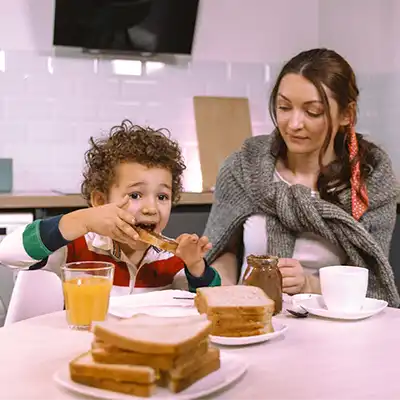
Parental addiction affects toddlers and young children deeply, even when the parent is doing their best to shield them. But with early support, stable routines, and a network of caring adults, toddlers and young children can thrive again. And when a parent receives the help needed to heal, the entire family has a chance to rebuild a stronger, healthier future.
If you or someone you love is struggling with addiction, free and confidential support is available every day. We can help you determine and take the next step.